Best futures prop firms
Discover the Best Futures Prop Firms for Aspiring Traders

TL;DR 🏆
The best futures prop firms for most traders in October 2026: Topstep (running since 2010, end-of-day drawdown), Tradeify (no daily loss limit in its Select evaluation) and My Funded Futures ($0 activation, no evaluation deadline). 💸 Expect a 90% profit split and evaluations from about $49. Honestly, the drawdown rule matters more than the account size.
The best futures prop firms in 2026? Honestly, they're the ones whose rules you can survive on a bad day. Topstep, Tradeify and My Funded Futures sit at the top of our list, with Apex Trader Funding, Take Profit Trader, Alpha Futures and Lucid Trading behind them. We ranked on published rules as of October 2026, not on whatever discount code is trending this month, and the drawdown type counted most.
Introduction to Futures Prop Firms
Understanding Futures Prop Firms
A futures prop firm lets you trade its capital in futures contracts once you've passed a paid evaluation. The contracts themselves are standardized. The exchange decides size, tick value and expiry; the prop firm only writes the rules wrapped around your account. So a Micro E-mini Nasdaq-100 (MNQ) is worth $2 times the index and moves $0.50 per 0.25-point tick no matter where you trade it, per the CME contract specs.
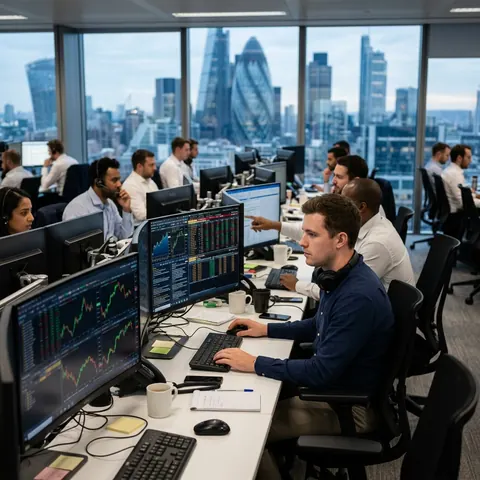
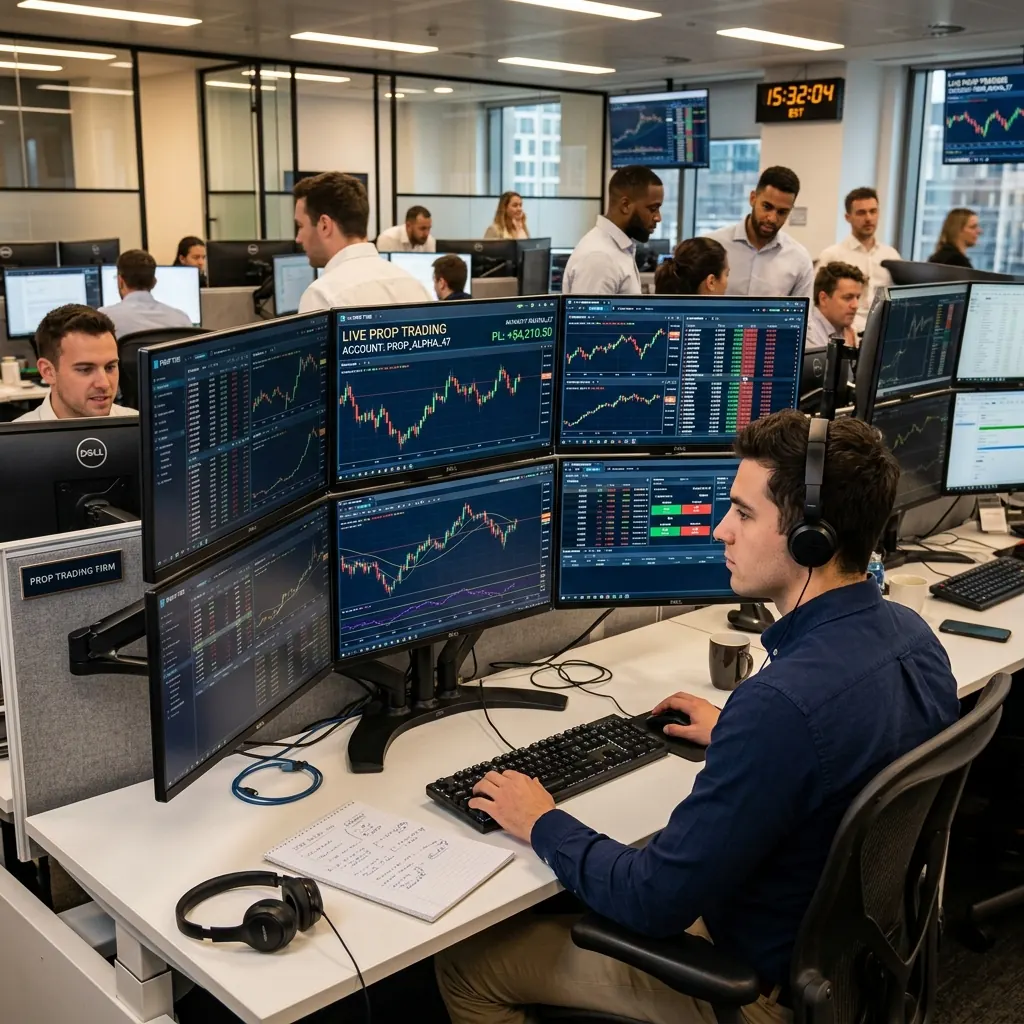
Proprietary trading used to mean a desk inside a bank or a trading house. Not anymore, mostly. A modern futures prop firm takes your fee, hands you a simulated account, and pays you a cut of the profits if you stick to its rules. Want the basics first? Read what a prop firm is and how prop firms work, then come back.
- Futures trade on regulated exchanges such as the CME, so every trader sees the same price and the same order book.
- Futures prop firms sell evaluations, fund the traders who pass, and keep 0–20% of their profits.
- Your real risk is the fee you pay. You are not liable for losses on the simulated account.
Top Futures Prop Firms to Consider
Our shortlist leans toward firms with end-of-day drawdown options, payout rules in writing and an actual history of paying people. Every detail below comes from the firms' rule pages, as summarised in Goat Funded Trader's October 2026 review and Prop Firm App.
| # | Firm | Best for | Drawdown | Activation fee | Funded split |
|---|---|---|---|---|---|
| 1 | Topstep | Structure and a live path | End-of-day trailing, locks at start balance | $149 (Standard) or $0 path | 90% |
| 2 | Tradeify | No daily loss limit in Select | End-of-day trailing | $0 | 90% |
| 3 | My Funded Futures | No deadline, fast Rapid payouts | End-of-day in evaluation | $0 | 90% |
| 4 | Apex Trader Funding | Running many accounts | End-of-day or intraday product | One-time PA fee on Standard path | 100% |
| 5 | Take Profit Trader | Payouts from day one | End-of-day in Test, intraday in PRO | $130 | 80% (90% PRO+) |
| 6 | Alpha Futures | An evaluation with no consistency rule | End-of-day trailing | $0 | 90% |
| 7 | Lucid Trading | One-time fees, no time limit | End-of-day trailing | $0 | 90% |
My Funded Futures earns third place for three reasons. A $0 activation fee on every plan. No fixed evaluation deadline. And Rapid accounts that can be payout-eligible 24 hours after your first funded trade, which is quick. The catch? Its rules are messier than Topstep's, so read the plan page before you buy.
Top One Futures keeps popping up in trader chats and has more than 2,000 reviews on LuxAlgo's futures directory. We just couldn't find enough published rule detail to rank it this month, so check its drawdown and payout pages yourself before paying. Same story with Finotive Futures, which sits in PropFirmMatch's futures list.
Others worth a look, too:
- FundedNext Futures: no activation fee, splits up to 95% and NinjaTrader, Tradovate and TradingView access, from $79 according to Fortunly.
- Funded Futures Family: running since 2024, from $79 a month, accounts up to $150K and a 90% split, per PropFirmWay.
- The Trading Pit Futures: a refundable fee, splits up to 80% and a wide platform list that includes Bookmap and NinjaTrader.
Want all ten, with prices? That's the top 10 futures prop firms page.
Evaluation and Performance Metrics
Evaluation Processes in Futures Prop Firms
An evaluation is just a simulated trading test with fixed rules: a profit target, a maximum loss, a contract limit, and sometimes a daily loss limit or a consistency rule on top. Most futures firms run a single step now. Pass once and you're moved to a funded account. Break a loss rule and you're out. Simple, and a bit brutal.
- Pick a plan and account size, usually 25K, 50K, 100K or 150K.
- Trade the simulated account until you reach the profit target, inside the loss limits.
- Pay any activation fee and move to the funded stage, where payout rules start.
Why does the firm care so much? Because evaluation filters traders cheaply. Only about 10–15% of challenge buyers pass, according to Prop Firm App, and even fewer ever see a first payout. LuxAlgo's open-source simulator says much the same: a developing trader passes roughly 29–55% of attempts depending on drawdown and consistency rules, while a proven edge passes almost anywhere.
Profit Targets and Their Importance
A profit target is the gain you need before the evaluation counts as passed. Topstep's Trading Combine wants $3,000, $6,000 and $9,000 on its 50K, 100K and 150K accounts. On 50K that's 6% of the nominal balance. It's also 150% of a $2,000 drawdown, and honestly, that second ratio is the one that shapes how you trade.
Targets bend your strategy in predictable ways. Set low against the drawdown, they reward patience. Set high, they tempt people to oversize, and people do. Add a consistency rule and the real target creeps up: under a 40% rule your best day can't top 40% of total profit, so one monster day just moves the finish line.
Understanding Drawdown Rules
Drawdown rules decide whether your normal strategy even survives the evaluation. In LuxAlgo's simulations it's the trailing drawdown, not the profit target, that sinks most failed attempts. There are three main types.
| Drawdown type | How it moves | Who it suits |
|---|---|---|
| End-of-day (EOD) trailing | Moves up only with your closing balance; intraday swings don't count | Most traders, especially anyone who lets winners run |
| Intraday trailing | Follows your highest open equity in real time | Tight scalpers who rarely give back open profit |
| Static | Fixed at the starting level and never moves | Traders who want a simple, predictable floor |
Topstep's Maximum Loss Limit trails the end-of-day balance and locks once it hits the starting balance. Apex Trader Funding now sells separate end-of-day and intraday products. Take Profit Trader? End-of-day in its Test, intraday trailing in its PRO funded account. I'd weigh those differences over a 10% gap in profit split any day.
Capital and Trading Strategies
Capital Provision by Futures Prop Firms
Firms advertise account sizes from about 25K to 150K, and a few go to 250K or beyond. PropFirmWay's October 2026 list of 12 firms shows evaluations from $49, funding up to $250K and splits up to 100%. Most of that capital is simulated, though. Topstep does move selected traders to a Live Funded Account with up to $150,000 of real money after strong performance.
Here's the number that actually matters, and it isn't the account size. It's the maximum loss. A 50K account usually allows $2,000–$2,500 of drawdown, so what you can really lose before it closes is about 4–5% of the label. Keeping the capital also depends on contract limits, inactivity rules and payout caps.
Supported Trading Strategies
Most futures prop firms are fine with day trading, scalping and swing trading on CME, CBOT, NYMEX and COMEX products. The limits kick in on how you get there.
- News trading: allowed at many futures firms, including FundedNext Futures, but check each plan's restricted events.
- Automation: Tradeify allows bots you own (no high-frequency trading); Lucid Trading allows automated strategies and trade copiers.
- Copy trading across your own accounts: Take Profit Trader permits it across up to five PRO accounts; Apex allows up to 20 accounts.
- Holding overnight: rules vary, and some firms require flat positions before the close.

Got a strategy that makes its money in a few big days? That fits firms with no consistency rule, covered on our no-consistency-rule page. Steady small gains fit pretty much anywhere.
Comparative Analysis of Futures Prop Firms
Pros and Cons of Leading Futures Prop Firms
| Firm | Pros | Cons |
|---|---|---|
| Topstep | Running since 2010; EOD loss limit that locks; live funded path; payout after five $150 winning days | Monthly billing; $149 activation on the Standard path; 50% consistency target in the Combine |
| Tradeify | No daily loss limit in Select; $0 activation; no consistency once funded; TradingView and Eurex access | 40% consistency in the Select evaluation; a younger firm (2024) |
| My Funded Futures | $0 activation; no evaluation deadline; no evaluation consistency rule; 24-hour Rapid payouts | Rapid funded accounts can use intraday trailing; 7-day inactivity rule |
| Apex Trader Funding | Up to 20 accounts; 100% split; can pass in one day | 30-day evaluation window; 50% consistency on payouts; six payouts per account |
| Take Profit Trader | PRO payouts from day one, daily after that | $130 activation; intraday trailing in PRO; 80% split until PRO+ |
So which futures prop firm is best? For most traders, the one whose evaluation, profit target, drawdown rules and capital match how they already trade. Not the other way round. If you can't explain the drawdown in one sentence, keep looking. Our prop firm comparison table lines up more rules side by side.
| Subject | Relation | Object |
|---|---|---|
| Topstep | was founded in | 2010 |
| Topstep Trading Combine | sets profit targets of | $3,000, $6,000 and $9,000 on 50K, 100K and 150K |
| Tradeify Select evaluation | uses | end-of-day drawdown with no daily loss limit |
| My Funded Futures | charges | a $0 activation fee on every plan |
| Apex Trader Funding | allows | up to 20 accounts at once |
| Micro E-mini Nasdaq-100 | moves | $0.50 per 0.25-point tick |
| Futures prop firm challenge | is passed by | about 10–15% of buyers (Prop Firm App) |
FAQ
Is $1000 enough to trade futures?
Yes, $1,000 can be enough to trade futures with micro contracts at some brokers. It just leaves very little room for a losing streak: an MNQ contract moves $0.50 a tick, so a 40-point stop costs $80. Honestly, for a lot of traders $1,000 works harder spread over a few prop firm evaluations, which start around $49 a month, since the firm's account carries the market risk.
What are the top 3 prop firms?
For futures, our top 3 prop firms are Topstep, Tradeify and My Funded Futures. Topstep wins on track record and the live path. Tradeify on forgiving evaluation rules. My Funded Futures on no activation fee and no deadline. Your call.
What is the #1 prop firm?
There's no official #1 prop firm, but Topstep is our #1 for futures. It's been running since 2010, uses an end-of-day loss limit that locks at the starting balance, and publishes a payout rule anyone can follow: five winning days of $150 or more.
Do you need $25,000 to day trade futures?
No, you do not need $25,000 to day trade futures. That number came from FINRA's old pattern day trader rule, and it only ever covered stock and options trading in securities margin accounts. It's gone now anyway: FINRA swapped it for intraday margin standards that took effect on 4 June 2026, with brokers allowed to phase the change in until October 2027. A futures prop firm evaluation? Just the fee.
Sources checked October 2026: Goat Funded Trader: 12 futures prop firms (2026), Prop Firm App: best futures prop firms, PropFirmWay: futures prop trading firms, LuxAlgo: futures pass-rate simulator, PropFirmMatch: futures prop firms, Topstep: what is a futures prop firm. Firms change rules often, so confirm every term on the firm's own site before you pay.