Prop firm basics
How Do Prop Firms Make Money: Understanding Their Business Model
TL;DR 💰
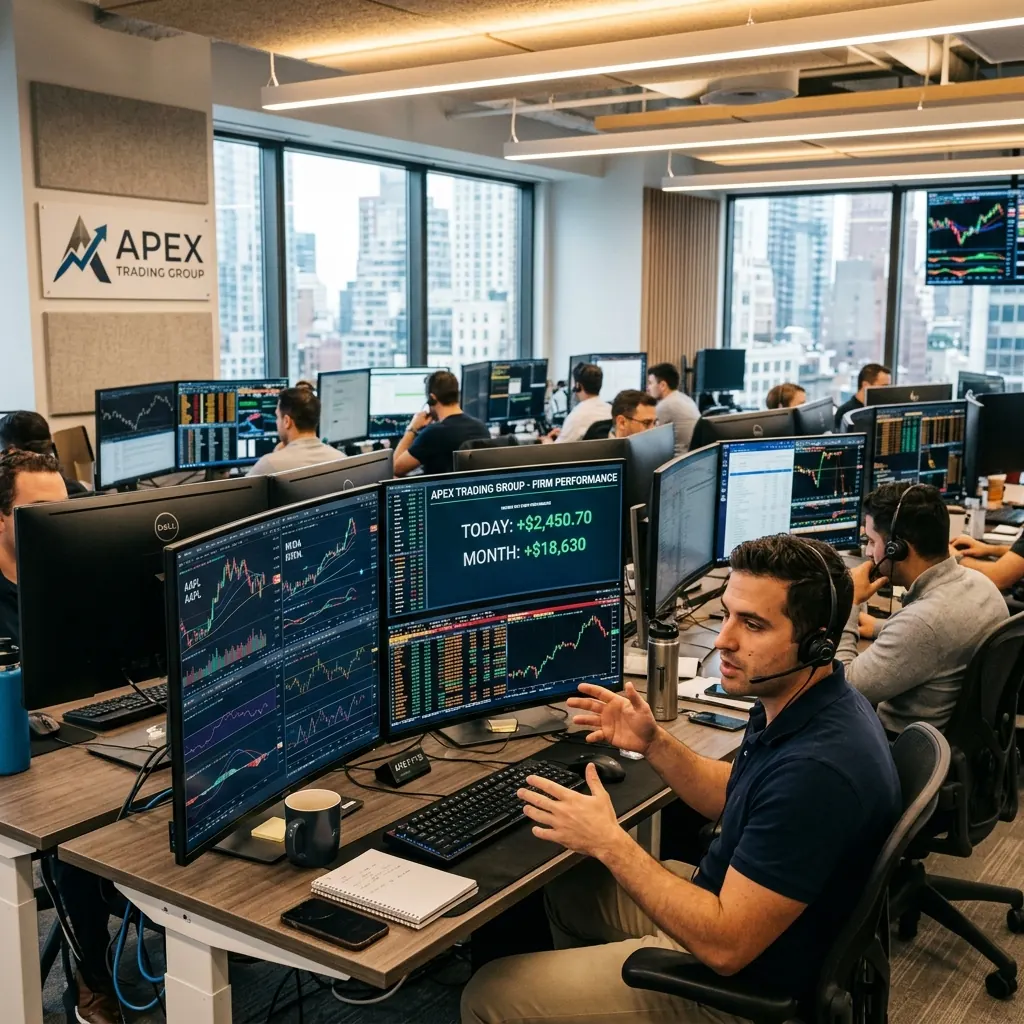
Prop firms make money mostly from evaluation fees, resets, activation charges and monthly subscriptions, since only a minority of buyers pass. 📈 The rest is their share of funded traders' profits (usually 10–20%), plus data, platform and education extras.
How do prop firms make money? Fees, mostly. Retail prop firms make their money from evaluation fees, resets, activation charges and monthly subscriptions, because only about 10–15% of buyers pass. The rest comes from their 10–20% cut of funded traders' profits, from data and platform charges, and at a handful of firms from trading real capital next to their best traders.
Introduction to Prop Firms and Their Revenue Model
What Are Prop Firms?
Prop firms give traders access to firm capital in exchange for a share of the profits. The traditional kind trade their own money on their own desks. The retail ones you meet online sell evaluations instead: you pay to prove you can follow risk rules, and the firm funds whoever passes. New to the whole idea? Start with what a prop firm is, it's a quick read.
Main Revenue Sources for Prop Firms
A retail prop firm's revenue comes from a few streams. How much each one weighs varies by firm, but the order below holds across most of the industry.
| Revenue stream | Who pays | Example from 2026 rule pages |
|---|---|---|
| Evaluation fees | Every buyer | Topstep from $49 a month; Bulenox Momentum from $94 |
| Resets and repeat purchases | Traders who fail | A reset costs less than a new evaluation at most firms |
| Activation fees | Traders who pass | $130 at Take Profit Trader; $149 on Topstep's Standard path |
| Profit splits | Funded traders who withdraw | 10% at Topstep; 0% on the first $10,000 at Bulenox Fast Track |
| Data and platform charges | Some traders | Bulenox lists $116 a month for professional CME data |
Evaluation fees dominate because the funnel is steep. Most buyers fail. Plenty buy again. And payouts only go to the small group that passes and then survives the funded stage.
Income Streams from Traders and Evaluations
The Role of Evaluation Fees
Evaluation fees pay for the firm's payouts and its profit. Here's the logic in round numbers, not any one firm's data: if 1,000 traders each pay $100, the firm collects $100,000. At a 10–15% pass rate (Prop Firm App's estimate), 100–150 traders reach a funded account, and only some of them clear the payout rules before they breach. The fees from the 850-plus who failed? They fund the payouts to the few who made it.
Which also answers something traders ask a lot: why are futures prop firms cheaper than forex ones? Part of it is simply how much risk each account carries.
- A 50K futures account usually allows a maximum loss of $2,000–$2,500, about 4–5% of the label.
- Forex and CFD programs often allow 10%: Instant Funding's PRO accounts, for example, start with a 10% maximum drawdown.
- A smaller maximum loss per account means a smaller liability per trader, so futures firms can price evaluations from about $49.
- Futures firms also compete hard on discounts; PropFirmMatch's October 2026 offers ran up to 90% off list prices.
Those fees are your real risk. Treat them as the price of a test. Not an investment.
Understanding Profit Splits
A profit split decides how a funded trader's profit gets divided. At most futures firms traders keep 80–100%. The firm's 0–20% looks small, sure, but it's skimmed from exactly the traders who are following the rules and making money.
- 90/10: Topstep, Tradeify, My Funded Futures and Lucid Trading.
- 80/20, then 90/10: Take Profit Trader's PRO and PRO+ accounts.
- 100% of the first $10,000, then 90%: Bulenox Fast Track and OneUp Trader.
- 50–80% by withdrawal size: Earn2Trade.
Payout caps, minimum winning days and consistency rules shape what the firm pays too, often more than the split does.
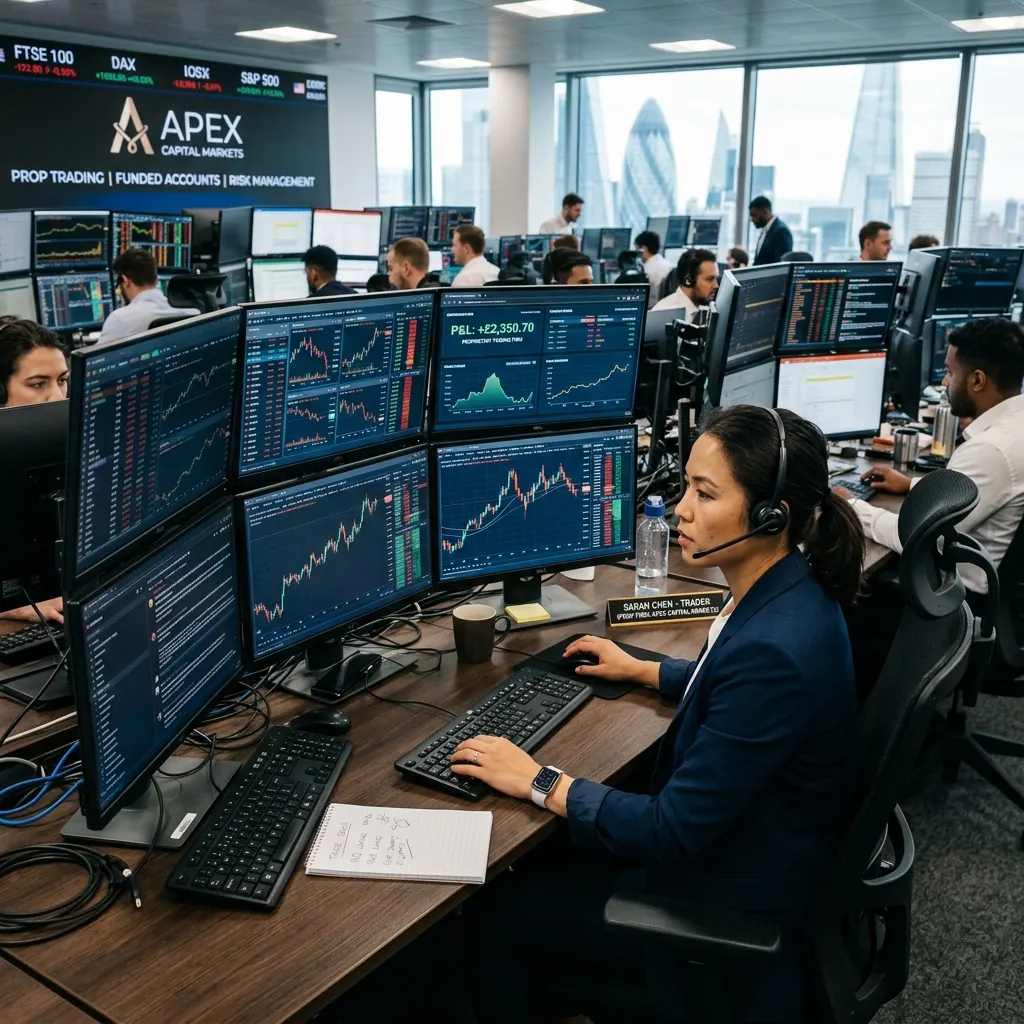
Risk Management and Trading Strategies
Importance of Risk Management
Risk management is how a prop firm keeps payouts below fee income. Every rule traders moan about has a business reason behind it.
- Maximum loss caps the firm's exposure per trader.
- Daily loss limits stop one bad session from turning into a blown account.
- Consistency rules stop a single lucky day from triggering a payout.
- Payout caps and buffers spread withdrawals over time.
- Live-capital gates mean real money only goes to traders with a long record.
Drop one of these and a firm usually tightens another. Track360 says the same about firms that scrapped the consistency rule: they leaned harder on end-of-day drawdown, strict daily loss limits and scaling plans instead.
Impact of Trading Strategies
Trading strategies hit a firm's payouts, so firms restrict the ones that game simulated accounts. Tradeify bans high-frequency trading bots. Goat Funded Futures prohibits copying other traders, external signals and third-party automated strategies. And most firms ban anything that leans on data-feed errors or latency gaps.
Plain day trading, scalping and trend following? All allowed. The rules go after strategies that would make money in a simulation but not in a real market, since those cost the firm cash without proving any skill at all.
Leveraging Technology and Expertise
Use of Cutting-Edge Technology
Technology is what lets a prop firm watch thousands of accounts at once. Risk engines check every open position against each account's loss limits, in real time. Firms build their own platforms as well: Topstep runs TopstepX, and DayTraders runs the browser-based ArcTrader.
Tech can be a revenue line, too. Data feeds, platform licences and third-party connections all cost money, and some firms pass it on. Bulenox, for one, charges an extra $100 a month to connect to Rithmic through a third-party API.
Leveraging Market Expertise
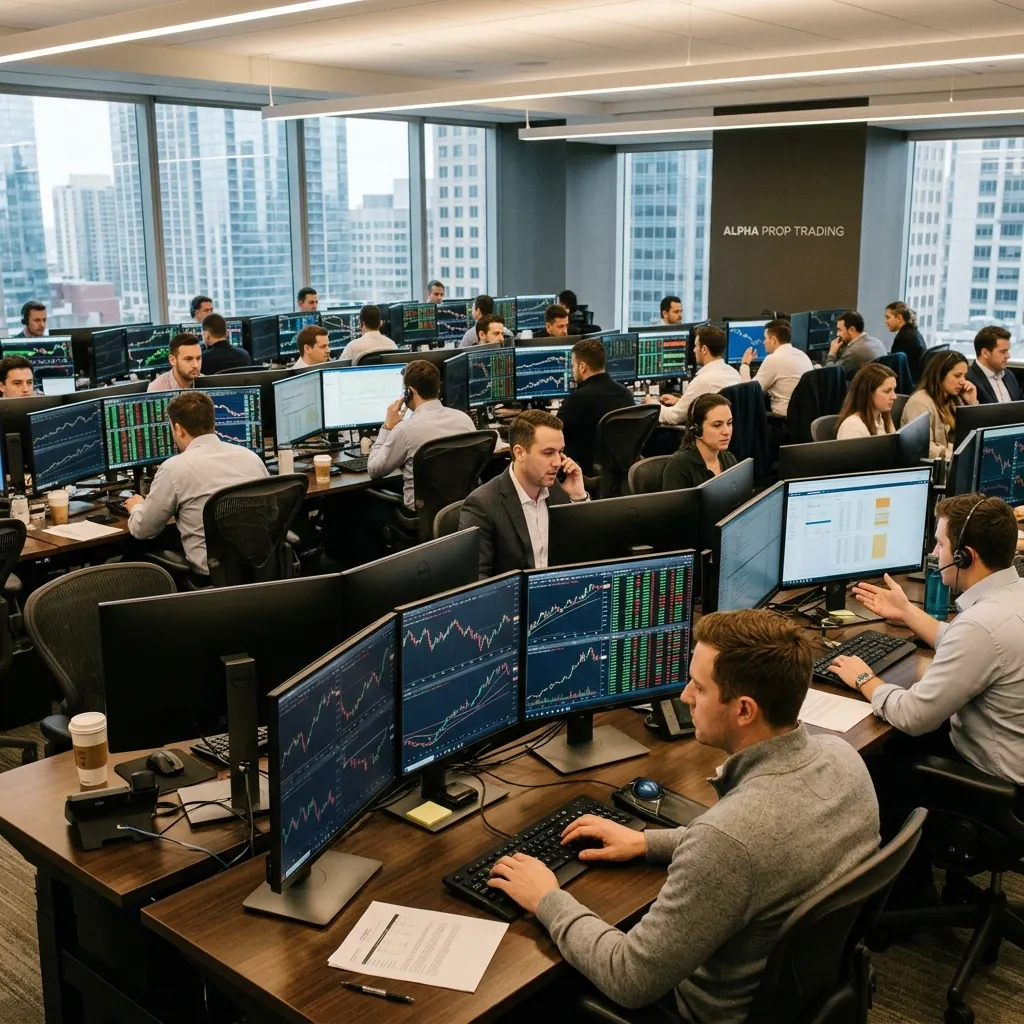
Market expertise matters most at the very top of the funnel, when a firm picks who gets real capital. Topstep's risk team invites funded traders into a Live Funded Account with up to $150,000 of real money, or calls them up after five payouts. Lucid Trading runs an invite-only live program, LucidMaxx. Firms that put real capital behind proven traders can earn from those traders' market profits, not just from fees. I think that's the healthier model.
Additional Revenue Streams
Monthly Subscription Fees
Monthly subscription fees keep charging until you pass or cancel. Topstep's evaluations start at $49 a month and OneUp Trader's run from $65 to $325 a month. For the firm, a subscription smooths revenue. For you, a slow evaluation gets pricey fast.
Some firms went the other way. My Funded Futures and Lucid Trading now sell evaluations for a one-time fee, usually the better deal if you need more than a month to pass. Our prop firm comparison lists each firm's pricing model.
| Subject | Relation | Object |
|---|---|---|
| Prop firms | earn most revenue from | evaluation fees and resets |
| Prop firm challenge | is passed by | about 10–15% of buyers (Prop Firm App) |
| Funded traders | keep | 80–100% of their profits at most futures firms |
| Take Profit Trader | charges | a $130 activation fee after passing |
| Topstep | sells evaluations from | $49 a month |
| Bulenox | charges | $116 a month for professional CME data |
FAQ
How much money do day traders with $10,000 accounts make per day on average?
On average, day traders with $10,000 accounts make less than nothing per day, because most of them lose money. A study of Brazilian futures day traders found 97% of those who stuck at it for 300 days or more lost money, and just 1.1% earned more than the minimum wage. A reliable "average daily profit" figure simply doesn't exist.
Why do 90% of day traders fail?
Day traders fail for the same few reasons, over and over: trading costs, oversized positions, no tested edge, and emotional decisions after losses. Prop firm rules expose those problems fast, which is why most evaluations end on the drawdown line.
What is the 90% rule in trading?
The 90% rule in trading is the old line that 90% of new traders lose 90% of their money within 90 days. Folklore, not a measured statistic. The measured numbers are grim anyway: broker risk warnings in the UK and EU commonly report that around 70% or more of retail CFD accounts lose money.
How do traders make money?
Traders make money when their winning trades earn more than their losing trades cost, after fees. Funded prop traders just add a step. They earn on the firm's account, then withdraw their share once the payout rules are met.
Sources checked October 2026: Goat Funded Trader: how prop firms make money, TradeInformer: how prop firms make money, Axcera: how prop trading firms make money, Axi: proprietary trading guide, Prop Firm App: best futures prop firms, Chague, De-Losso & Giovannetti: Day Trading for a Living? (2019). Firms change rules often, so confirm every term on the firm's own site before you pay.